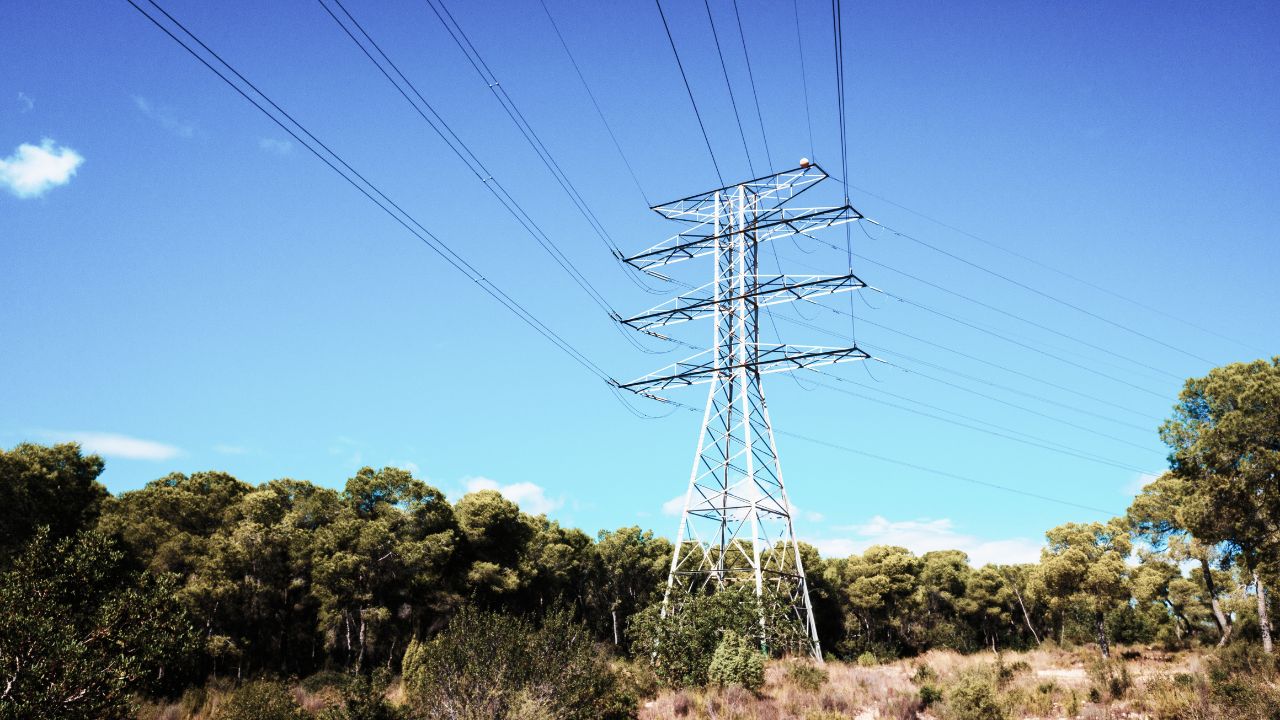

A sector under sustained pressure
Energy and water utilities operate at the intersection of essential service delivery, regulatory scrutiny and long-term transformation. These organisations are responsible for maintaining critical infrastructure while simultaneously planning for a future that looks fundamentally different from today.
Image 1: Utilities leaders face five competing investment streams drawing from one resource pool
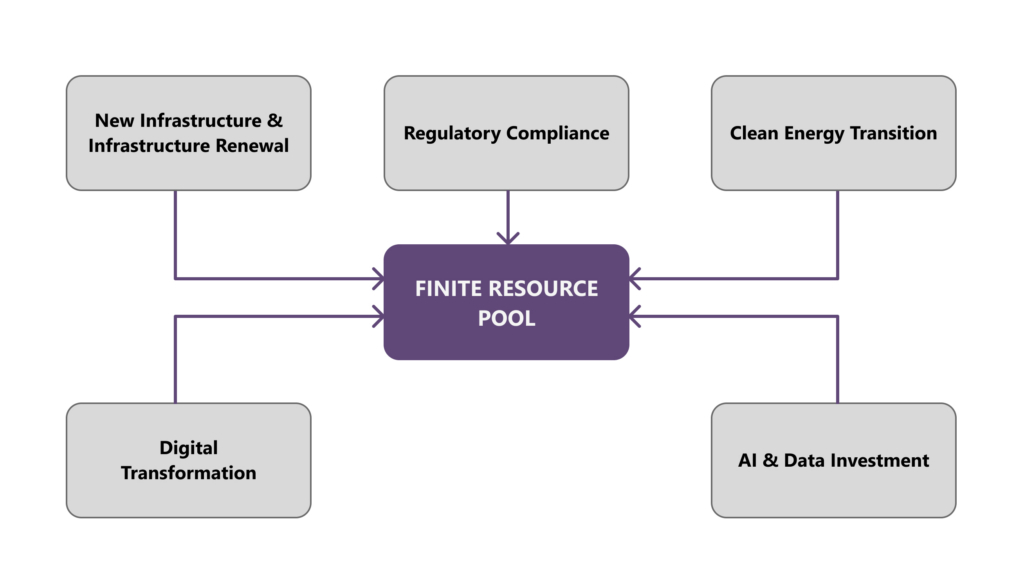
Across the sector, utilities are balancing:
- Infrastructure maintenance and renewal
- Network resilience and growth demand
- Regulatory compliance and audit expectations
- Transition to renewable and clean energy targets
- Large-scale digital and data transformation initiatives
This is not a typical project environment. It is a complex, multi-decade investment landscape, where competing priorities must be continuously assessed and justified.
Yet despite this complexity, many utilities still manage projects and investments through fragmented processes, disconnected systems and manual reporting approaches that were not designed for this level of strategic demand.
The growing complexity of investment across utilities
Utilities do not operate in a single investment landscape. Instead, they manage multiple overlapping streams of work that must coexist, compete and ultimately align.
Large-scale infrastructure programs remain foundational, with long-lived assets requiring continuous renewal, maintenance and optimisation. Alongside this, organisations must plan for future grid or catchment evolution, responding to population growth, climate pressures and changes in demand.
These priorities are now intersecting with a new set of demands. Clean energy mandates and emissions targets, often set against fixed regulatory timelines, are reshaping investment strategies across the energy sector. Digital transformation initiatives are modernising reporting, customer systems and operational visibility, while additional investment is being directed toward AI-enabled capabilities and data-driven planning.
Each of these streams is critical. None can be deprioritised. Yet all draw from the same finite pool of funding, resources and organisational attention.
For leaders, the challenge is no longer simply managing delivery, it is navigating a portfolio of competing investments, each with its own urgency, risk profile and strategic importance.
Fragmented data and the illusion of visibility
In theory, utilities are rich in data. Operational systems track assets, maintenance and outages, ERP and financial platforms manage budgets and forecasts, HRIS and project tools monitor work safety and delivery activity in detail.
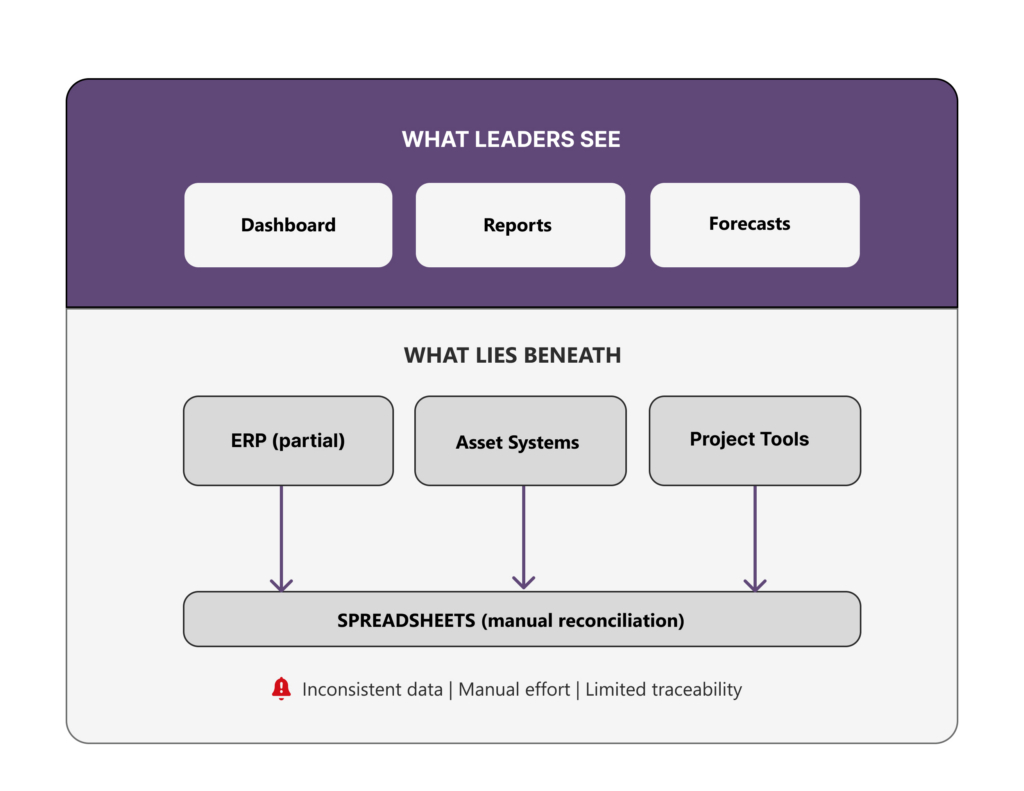
In practice, however, these data sources rarely come together in a way that provides a coherent view of the enterprise portfolio. Information is distributed across systems, each with its own structure, ownership and reporting logic. To produce a consolidated perspective, data must often be manually extracted, reconciled and interpreted.
The result is a form of “assumed visibility”, reports are produced, dashboards are presented, and decisions are made, but the foundation beneath them is often unreliable.
Over time, this fragmentation erodes the organisation’s ability to clearly answer some of its most important questions: what is being funded, why those decisions were made, and how those investments support long-term strategy.
Image 2: Assumed visibility masks the gap between reported and actual portfolio clarity
The persistent reliance on spreadsheets
In many utilities, spreadsheets remain the connective tissue between systems. They provide flexibility where platforms do not align, allowing teams to consolidate, model and report on portfolio information.
Yet this reliance comes at a cost. Spreadsheets are inherently manual, dependent on individuals and difficult to standardise across an enterprise. As portfolios grow in size and complexity, so too does the effort required to maintain them.
For PMO teams, this often translates into a disproportionate level of administrative effort. Significant time is spent gathering data, reconciling inconsistencies and preparing reports. Time that could otherwise be focused on supporting decision-making and improving outcomes.
More critically, spreadsheet-driven processes struggle to provide the access, auditability and traceability required in a regulated environment.
Legacy systems and the limits of operational approaches
Utilities have made substantial investments in systems designed to manage the operational realities of their environment. These platforms are highly effective at coordinating field work, managing assets and ensuring compliance with safety and environmental obligations.
However, they are not designed to operate at an enterprise portfolio level. Their focus is execution, not prioritisation. They manage “how work is delivered,” rather than “what work should be funded and why”.
This creates a growing disconnect between operational performance and strategic intent.
Infrastructure renewal must proceed alongside transformation programs. Regulatory commitments must be met while new capabilities are introduced. Long-term planning must coexist with immediate operational demands.
At the same time, resources, funding and specialist expertise remain constrained.
Without a clear, enterprise-wide view, prioritisation often becomes reactive. Organisations may find themselves delivering a high volume of work, but with limited confidence that the overall investment mix is optimal.
Regulatory scrutiny and the need for longer-term, defensible decisions
Utilities must operate with a level of transparency that few other sectors experience. Investment decisions must be aligned to regulatory frameworks, withstand audit and demonstrate long-term value.
This requirement extends far beyond initial approvals. Organisations must be able to clearly articulate:
- Why a decision was made
- What alternatives were considered
- How outcomes are being tracked over time
- How investments are adjusted to meet changing circumstances
In fragmented environments, this becomes increasingly difficult, placing pressure on governance functions and increasing organisational risk.
Added to this, utilities plan in decades, not years.
From energy transition to water security, today’s decisions influence outcomes far into the future. This requires organisations to continuously balance immediate delivery needs with long-term strategy.
Without integrated visibility and scenario modelling, long-term planning becomes disconnected from execution, limiting the organisation’s ability to adapt as conditions change.
Moving towards a more integrated portfolio approach
As complexity grows, many utilities are recognising the need for a more connected approach to portfolio management, one that brings together strategy, investment decisions and delivery in a consistent, structured way.
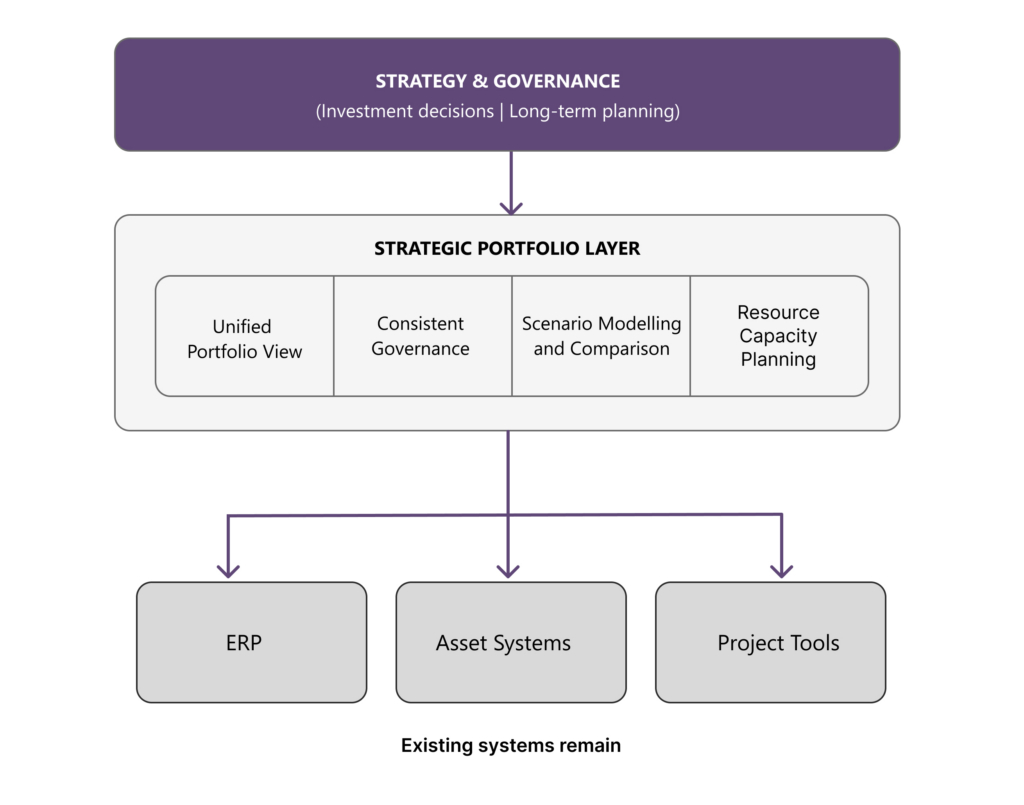
This does not require replacing existing operational systems. Instead, it requires introducing a layer that connects them to provide clarity, governance and alignment at the enterprise level.
The role of strategic portfolio management
Strategic portfolio management provides this connective layer.
It enables organisations to move beyond fragmented reporting and develop a coherent view of their portfolio, bringing together information from across systems into a single, trusted source.
From this foundation, organisations can establish consistent governance, strengthen audit readiness and improve decision-making. Competing investment priorities can be evaluated using consistent criteria, supporting more deliberate and transparent prioritisation.
Importantly, it also enables long-term planning to become more dynamic. Scenario modelling and benefits tracking allow organisations to understand the implications of their decisions over time and adjust as needed.
In this way, strategic portfolio management shifts the focus from simply delivering projects to ensuring that every initiative contributes to broader organisational outcomes.
Image 3: Strategic Portfolio Management
From activity to alignment
The utilities sector is not lacking in capability or investment. What is changing is the level of coordination required to manage it effectively.
Success is no longer defined by delivering more, it is defined by delivering the right things, at the right time, for the right reasons.
Achieving this requires visibility, governance and alignment across the entire portfolio.
Building confidence in complex environments
Utilities are navigating one of the most complex and transformative periods in their history. The convergence of regulatory pressure, infrastructure demand and technological change is reshaping how organisations plan and invest.
In this environment, confidence becomes critical. Confidence that investment decisions are well-founded, that priorities are aligned, and that outcomes will deliver long-term value.
A strategic portfolio management approach provides a way to build that confidence by bringing clarity to complexity and connecting decisions across the organisation.
A practical perspective on enabling this shift
For utilities beginning this transition, the goal is not to introduce another layer of complexity, but to establish a framework that makes existing systems, data and processes work together more effectively.
In practice, this often involves introducing a strategic portfolio layer that sits above operational tools. One that brings together investment planning, governance and delivery into a unified view of the organisation.
Solutions such as Altus have been designed specifically to support this approach, providing a means to connect strategy to execution without disrupting the systems already in place. By acting as a unifying layer across capital, regulatory and transformation portfolios, they enable organisations to reduce fragmentation, strengthen governance and improve confidence in decision-making.
The most important shift, however, is not technological. It is organisational.
It is the move from managing projects in isolation to managing investments as connected portfolios where visibility, prioritisation and alignment are consistently applied across the enterprise.
For utilities facing increasing complexity and scrutiny, this shift is becoming less of an option and more of a necessity.
Sensei has deep experience implementing project and portfolio management solutions with Australian energy and water utilities and can share this with you.
Get in touch for an initial conversation.